
The KMA Story
The KMA story
Background
The “KM8 Project” was the first successful attempt to produce geothermal energy from a repurposed oil and gas well within the UK.
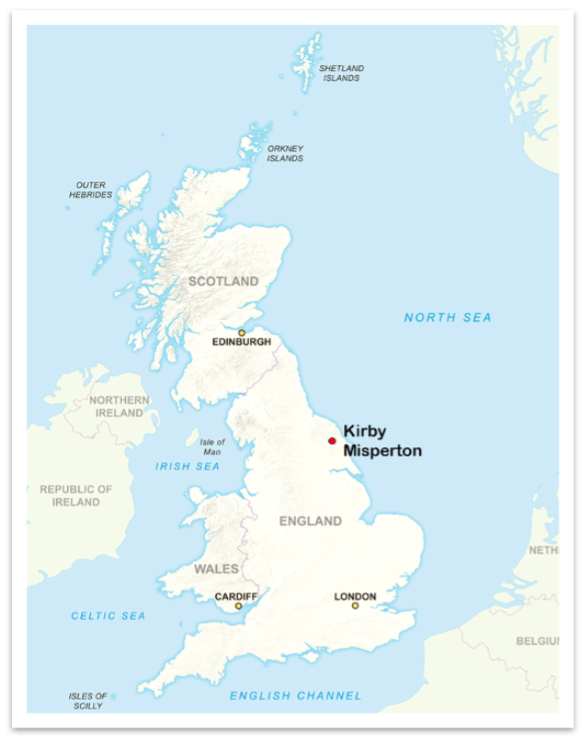
The KMA site at Kirby Misperton has been active since 1985 following the drilling of the well KM-1 and two years later well KM-3. Initially operated by Taylor Woodrow Energy Limited the site lies approximately 1 kilometre west of the North Yorkshire village of Kirby Misperton.
Well KM-7 was sidetracked from KM-1 in late 2012 and Kirby Misperton-8 was drilled in 2013. The site changed hands several times, over the years until it was finally acquired, and operated by, Third Energy.
KM-8 was originally drilled to use the technology of well stimulation or fracking to increase the potential returns that could be obtained from the well. Fracking has been used in the UK since the sixties but came to prominence with the general public in 2011 when fracking activities in Lancashire caused small scale seismic events. Kirby Misperton was brought to the centre of the UK’s attention following the 2016 decision by North Yorkshire County Council to allow fracking to take place at the KM8 site. Demonstrations began in December 2016 and continued through until early 2018 when the decision was made by Third Energy to suspend all fracking operations.
In 2019 the UK government placed a moratorium on all fracking events in England with immediate effect.
The project
In 2023, CeraPhi partnered with Net Zero Technology Centre, Third Energy, Weatherford and Genius Energy Lab to utilise their asset, knowledge of oil and gas technology and geothermal modelling expertise to establish a demonstration site where equipment could be deployed into an existing, non-producing onshore hydrocarbon well, run various simulations, monitor and analyse the results to validate the modelling.
The two key deliverables from the project were:
- Prove that a prototype design could be deployed and,
- Prove that the output from the system meets the predicted modelled output and is technically and commercially viable.
Following significant local community engagement the CearPhiWell was installed in the well and connected to the CeraPhiTRU.
Over a number of weeks various simulations were run, the outputs monitored and the results analysed to validate the modelling. Following this period, the site was opened to visitors to demonstrate first-hand the practical results of the project. During that period a variety of visitors attended the site including:
- Members of Parliament,
- Cross-industry stakeholders (Domestic, Education, Agriculture, National Parks, Forestry Commission),
- Academia (Professors and students),
- Representatives from O&G companies and renewable energy companies,
- Local residents and members of the public with a general interest
- Local Government Officers and County Councillors (various counties)